Showing posts with label ballett. Show all posts

Wednesday, November 21, 2018

Labyrinth - Titel eines vierteiligen Ballettabends und der Gang des Lebens

Vor einigen Wochen feierte der vierteilige Ballettabend "Labyrinth" des Semperoper Ballett an der Semperoper seine Premiere. Bis zum 21. November (heute) stehen noch fünf Aufführungen in dieser Spielzeit für die Möglichkeit eines Besuchs dieser faszinierenden Collage aus den unterschiedlichsten Stilen moderneren Baletts zur Auswahl. Alle Stücke werden übrigens live von der Staatskapelle Dresden begleitet, was insbesondere bei moderneren Stücken nicht immer üblich ist.

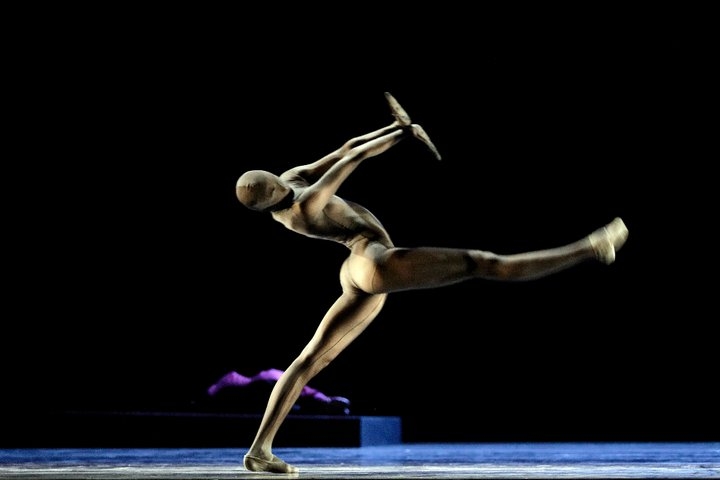
Aaron S. Watkin hat seine Vision  an diesem Abend einmal mehr auf der Bühne manifestiert. Vom bekanntem neoklassishcem George Balanchine über die selten getanzte Martha Graham und den bereits am Haus bekannten Ohad Naharin hin zu einem "unbekannten" jungen Choreographen aus eigenen Reihen der Company, Joseph Hernandez, reichte der Bogen. Die Eindrücke konnten nicht unterschiedlicher sein. Übergreifende Klammer der vier Stücke, die die Zeitspanne von 1946 bis hin zu 2018, ist das Layrinth der Emotionen (ob positiv oder negativ), der wir uns alle beständig im Leben individuell und kollektiv auseinandersetzen. Oft sind wir in unserem eigenen "Gedankenschloß" ("Interior Castle" ein animierter Videoclip einer Teilnehmerin des MOOC "u.lab - Leading From the Emerging Future", an den mich der Abend spontan erinnerte) gefangen, sehen und spüren weniger unsere persönlichen Emotionen und wie diese unsere Handlungen beeinflussen.

Das Stück "Die Vier Temperamente" von George Balanchine mit Musik von Paul Hindemith, der diese als Auftragsarbeit bereits 1940 komponierte zeigte die Präzission, den immer wieder faszinierenden "Tanz auf Spitze" und die physische Ästhetik, der durch die schlichten in Schwarz und Weiß gehaltenen typischen 40er-Jahre Tanztrikots, die die Tänzerinnen und Tänzer des Semperoper Balletts insbesondere im großen Team auf der Bühne beherrschen. Besonders hervorzuheben ist, dass zahlreiche Ensemblemitglieder sich am Anfang ihrer Tanzkarriere befinden.

"Errand into the the Maze", uraufgeführt nur ein Jahr später, 1947, am gleichen Ort wie "Die Vier Elemente" hätte nicht unterschiedlicher sein können. Daran anschließend "Black Milk" von Ohad Naharin, der schon in der Vergangenheit faszinierende Produktionen wie "Minus 16" (Video des vierteiligen Abends "Bella Figura" (ab 1:50 min) gemeinsam mit dem Sempeeroper Ballett auf die Bühne der Semperoper brachte.

Zum Abschluss das bereits erwähnte neue Stück von Ensemble-Mitglied Joseph Hernandez "SONGS FOR A SIREN"- hierzu bedarf es keiner weiteren Worte, die Bilder, Emotionen und die in einem selbst aufsteigenden Assoziationen und Fragen einfach wirken lassen.

Wer sich noch schnell entscheidet, heute ist wirklich die letzte Chance (Beginn 19 Uhr), hier ein kurzer Einblick in die vier Stücke oder auf dem Youtube-Kanal des Semperoper Balletts.

Presencing Status (short feedback on four short questions):

  • Good - exzellenter Querschnitt, Live-Begleitung durch die Staatskapelle Dresden und Alfredo Miglionico
  • Tricky - nichts außer, dass ich diesen Artikel noch am Premierenabend begonnen hatte und erst heute mit der anstehenden letzten Vorführung "Hals über Kopf" beende 
  • Learned - Gedanken freien Lauf lasen und Assoziationen mit Bekannten nachspüren
  • Action - Empfehlung aussprechen

Wednesday, March 16, 2016

COW, oder wie ein Schwede das Verständnis von Ballett verändert

Am vergangenen Samstag den 12. März 2016 hatte "#COW - Ein Ballett" des schwedischen Choreographen Alexander Ekman auf der Bühne der Dresdner Semperoper Premiere. Nachdem der interessierte Ballettfreund (oder auch -freundin) bereits 2013 mit "Cacti" (im Rahmen von "Nordic Lights", das in der kommenden Saison wieder zu sehen sein wird) einen ersten Vorgeschmack auf seine Arbeit gewinnen konnte (seine Arbeiten unterscheiden sich, obwohl noch Anleihen des zeitgenössischen Tanzes vorhanden sind, ähnlich disruptiv von "üblichen" Ballettstücken wie einst Braque und Picasso mit dem Kubismus gegenüber der traditionellen Maltechnik und dem Fokus auf die Perspektive) stand also eine neue Überraschung auf dem Programmplan.

https://www.semperoper.de/spielplan/stuecke/stid/cow/
Warum die "Kuh" als Maß eines Ballettstückes? Die kurzen Clips zum Making von "COW Ein Ballett" sind dabei recht hilfreich (und unterhaltend zugleich).

Doch wer ein traditionelles Ballett mit viel Tanz erwartet - nun der wird möglicherweise ein wenig (oder mehr) enttäuscht von Dannen ziehen sollte er/sie sich für eine Karte der folgenden Aufführungen (heute Abend ist übrigens schon gleich die nächste - über die kommenden Wochen folgend noch sechs weitere Auführungen) geholt haben.

Obwohl, und dafür lohnt sich ein mutiger Gang in die 1.200 Besucher fassende Semperoper auf jeden Fall, wenn die Neugier größer als die Unsicherheit dessen, was einen erwartet, ist. Wer es wagt wird erleben, was eine Top-Ballettcompany wie das Semperoper Ballett wirklich kann (neben Balanchine, Forsythe, McMillan, u.a.) - ein Besuch lohnt sich. Darüber hinaus ist das Ballettstück ein außergewöhnliches "Cultural Island" (engl.; Blog von Abiel Guerra mit dem ich 2009 an einem Workshop von Edgar Schein teilnahm), das den Zuschauer aus seiner gewöhnlichen Rolle als ruhiger Betrachter und Genießer förmlich auf die Bühne und in den Flow zieht.

Wer sich vor einem Besuch der Bandbreite der Stimmungen offenbaren möchte, dem seien folgende Kritiken empfohlen:
... die obigen Kritiken in unbestimmter, wie gefundener, Reihenfolge und ohne Wertung. Jeder möge sich selbst eine Meinung bilden und dann entscheiden.

Ohne mich an dieser Stelle zu wiederholen (die vorliegenden Kritiken gehen bereits auf zahlreiche Aspekte ein) hier in aller Kürze der #PresencingStatus:
  • Good - Ballett mal ganz anders; Einbeziehung der kompletten Bühnentechnik (faszinierend, was alles möglich ist und selten zu sehen ist); ein neugieriges Premierenpublikum; es durfte auch spontan gelacht werden 
  • Tricky - keine Pause, um das Erlebte mit anderen auszutauschen; vergessen, dass Programmheft zu erstehen (da dürften noch einige Hintergrundinformationen zu finden sein
  • Learned - es bedarf Mut, ein solches Stück auf die Bühne zu bringen, und Aaron S. Watkin, Künstlerischer Direktor des Semperoper Ballett, kommt seiner Vision immer näher (die zahlreichen Einladungen der Company aus dem In- und Ausland machen dies ebenfalls mehr als deutlich)
  • Action - sicher ein oder zwei weitere Besuche (mal schauen, was sich machen lässt zeitlich)

Tuesday, April 29, 2014

MEISSEN® - Ein Traum aus Porzellan

Manchmal bringt die eindrucksvollsten Erfahrungen im Leben der Zufall. Was aus einer Mitnahme eines Flyers zum Tag der Offenen Tür der Staatlichen Porzellan-Manufaktur MEISSEN® im BioInnovationsZentrum Dresden werden sollte war Mitte der Woche noch nicht abzusehen.

MEISSEN® - man kennt das Porzellan, das man sich wahrscheinlich nicht als Standardtischgedeck für zu Hause zulegen würde. Doch weiß man auch, was wirklich dahinter steht?

Samstag, 26. April 2014 (übrigens der 1. von zwei Tagen der Offenen Tür in 2014, der neugierigen Besuchern offen steht; 18. Oktober 2014 auf jeden Fall schon einmal im Kalender vormerken) ab 9:00 Uhr ist die Staatliche Porzellan-Manuktur MEISSEN® (auch liebevoll "Manu" genannt) geöffnet.

"Forbidden Fruit" by Chris Antemann
Bis es mit der Führung zur Entstehung des neuer Arbeit von Chris Antemann, momentanen Artist in Residence im MEISSEN® ArtCampus, "Forbidden Fruit"losging ließ sich in den Gängen bereits ein erstes Gefühl für die handwerkliche Exzellenz erspüren, die mit dem Namen MEISSEN® verbunden ist. Was oft beim Betrachten der Preisschilder schockierend anmutet relativiert sich wieder wenn man lernt, dass sich Brennvorgänge (insbesondere bei filigranen und Großplastiken) über mehrere Wochen hinziehen und die fertigen Produkte nach dem Brennen ca. 16% Ihrer Masse verloren haben. Durch die hervorragende Führung von Frau Danielczyk gewann die "Gruppe der Fünfzehn" nicht nur einen ersten Einblick in das Manufakturgeschehen in den Produktionsräumlichkeiten, sondern auch zunehmend ein Gespür der Wertschätzung der filigranen Arbeiten der Kolleginnen und Kollegen, die an diesem Samstag Dienst taten.

Erinnerungen an meine ersten Erfahrungen mit dem Semperoper Ballett werden wach. Man sieht das fertige Ergebnis. Doch weiß man bereits, welche Arbeit, Fingerfertigkeit, Können und Teamwork und Prozessabläufe dahinter stehen?

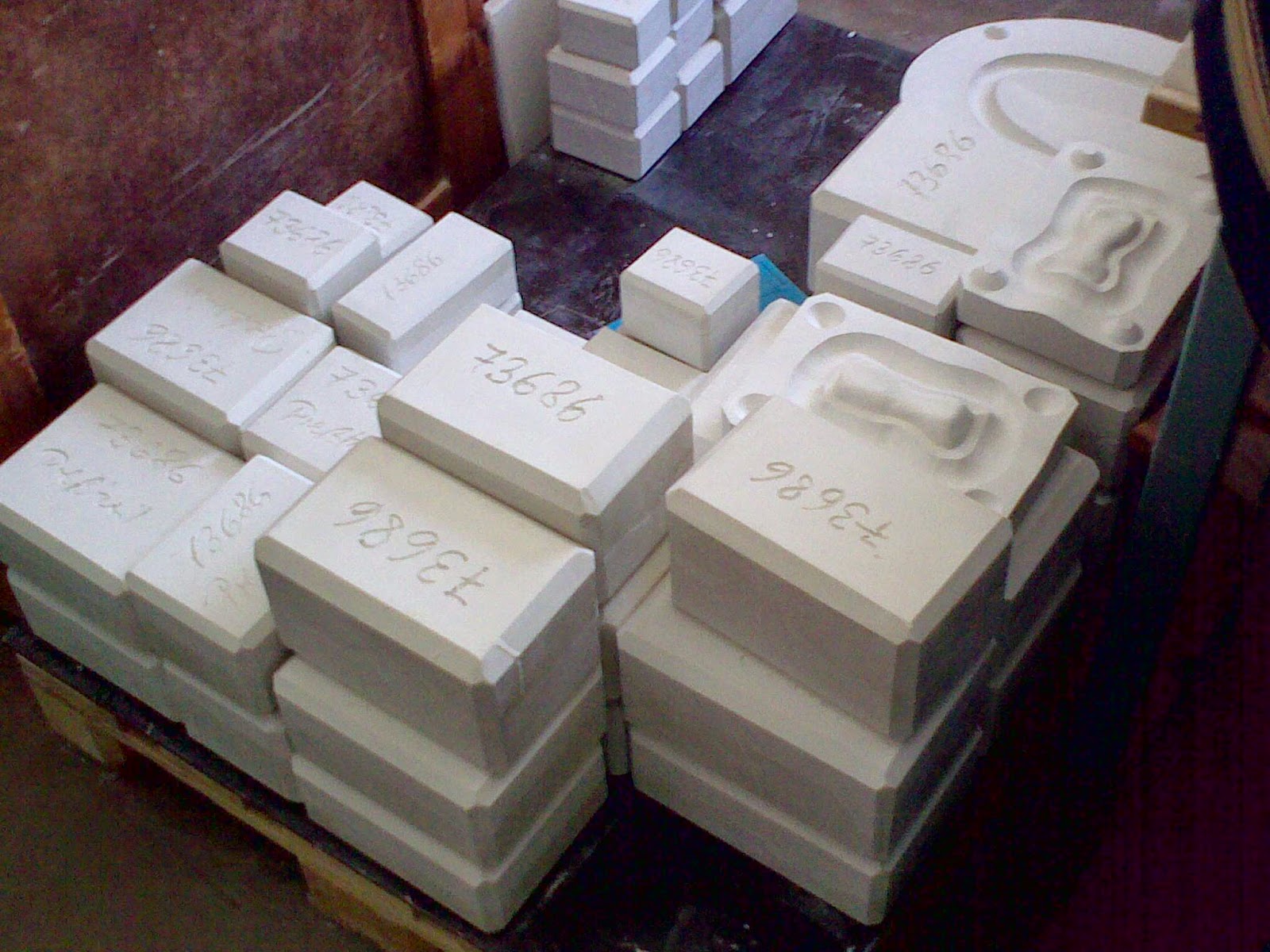
Was auf den ersten Blick wie ein Unikat aussieht ist in Wirklichkeit eine Kleinserie (in diesem Fall acht Exemplare), die mit Zuhilfe-nahme von Dutzenden und mitunter Hunderten von Formen (rechts) semi-standardisiert produziert werden. Doch nicht alles kann in dieser Weise vorproduziert werden. Die "wahre" Handarbeit kommt sobald es ans Bemalen und die zahlreichen ergänzenden Bestandteile wie z.B. Locken geht.
Unter einer Plastikfolie, damit das Austrocknen nicht zu schnell geschieht finden sich allerlei Assessoires, die in reiner Handarbeit geformt werden. Wenn man das fertige Produkt sieht macht man sich selten Gedanken, wie dieses in Realität hergestellt wird. Kennt man doch auch in der Regel nicht die Produktionsorte und kann den Machern "über die Schulter schauen". Unten sieht man den Tisch, der mit seinen reichlich gedeckten Schüsseln und Tellern den Mittelpunkt von "Forbidden Fruit" bildet. Und es gehr wahrhaft nicht um Essen allein - nicht umsonst lautet der Titel der Arbeit "Verbotene Frucht".

"Forbidden Fruit" 

Nach Beendigung der Führung und der Entlassung in die Museumsräumlichkeiten, die sich über mehrere Etagen erstrecken war die Neugier erst recht geweckt, mehr und vor allem tiefer in die Produktion dieses Traditionshauses zu gehen.

Neben solch kolossalen Kunstwerken aus Porzellan ist es selbstverständlich, auch das traditionelle Tafelgeschirr u.a. mit dem für MEISSEN® typischen Zwiebelmuster (wobei es sich wie wir von den Kollegen im Brennofenraum erfuhren nicht um Zwiebeln handelt, sondern um den im 18. Jahrhundert in dieser Gegend unbekannten Granatapfel) zu bewundern. Was zunächst nach einem 1-2 Stunden dauernden Besuch aussah, sollte sich wider Erwarten und manch positiver weiterer Überraschung zu einem Ganztagsbesuch ausweiten.

Dass es unmittelbar in der Nähe der Manufaktur auch noch einen besonderen Schatz gibt ist nicht
jedem bekannt. Die Nikolaikirche unmittelbar an der Bahnstrecke gelegen beherbergt die weltweit größten Figuren aus Meissener Porzellan. Paul Emil Börner, Direktor der künstlerischen Abteilungen der Meißener Manufaktur, gestaltete Ende der 20er Jahre des vergangenen Jahrhunderts die Ausgestaltung der Kirche, die damals keine kirchliche Funktion mehr hatte.

Der Tag schloss mit zahlreichen neuen Erfahrungen aus Produktion, künstlerischen Büros und Einsichten von Mitarbeitern der Staatlichen Porzellan-Manufaktur MEISSEN®. Wie Leidenschaft ein Unternehmen in dieser Liga prägt und wie wichtig die Mitarbeiter für den Erfolg sind, ob in der Schauwerkstatt, Brennofen, Formenbau, Archiv, Zeichenbüros. Mehr wie die Leidenschaft gemeinsam für exzellente Produkte sorgt findet Ihr unter "Passion, Craftsmanship and Technology" (in englisch).


Zu sehen im Innenhof der Manufaktur
PresencingStatus bzw. kurze Reflexion zum Besuch der Offenen Tür der Staatlichen Porzellan-Manufaktur MEISSEN®:
  • Good? Flyer im BioInnovationsZentrum "gescannt", um 9 Uhr in Meißen, sich auf Neues eingelassen, viele interessante Gespräche
  • Tricky? Frühes Aufstehen
  • Learned? Leidenschaft steht hinter jedem exzellenten Produkt/Service - und die erlebt man erst im persönlichen Gespräch 
  • Action? Zwei Blogbeiträge (deutsch und englisch) schreiben (bereits geschehen), am 18. Oktober 2014 wieder da sein

Thursday, November 22, 2012

Bella Figura - Mindful Creation of a Personal Setting

Photo: Costin Radu
The visit to the last performance of 'Bella Figura' on 11th of November, 2012 at Semperoper Dresden was definitely different - the second visit to Semperoper Ballett's first premiere piece this season. With more than sadness the premiere on the 27th of October, 2012 was filled as Hans Werner Henze, creator of "Das Vokaltuch der Kammersängerin Rosa Silber" choreographed by Helen Pickett, had died earlier that afternoon in Dresden.

"Bella Figura" is the title of this ballet evening with three, more than different looking, pieces. Contemporary dance orientated choreographers building on music from the baroque times to today. What shall the audience expect to see, hear, and feel? As frequent readers of my reviews on ballet in Dresden you may already know, the focus of this kind review is more on the overall impact, the notions that are set free by the evening (or not) and unseen connections into our lives, than on the technical perfection of the dance company itself.

One thing that is trickling through the minds of over a thousand opera visitors, as the room fills up, in their minds, as well as in mine these thoughts must have also come up, "According to the introduction in the basement, this is going to be not the normal performance. But what is it going to be?"

It seems quite so that Edgar Schein has been right in his short essay "The Role Art, and the Artist"with the point, "First, art and artists stimulate us to see more, hear more, and experience more of what is going on within us and around us". During the intermissions - as to jump forward for a second into the middle of the evening - I met friends, local tech-entrepreneurs to be exact, who were mind-wandering about the further development of the evening - a good sign, that emotion sensors have been activated by the artists on stage already!

The leading question this evening, "What is the bonding element that holds the pieces together, so to see it as a 'whole'?"

This time prior to the performance the "movie makers" of Semperoper Ballett, Ian Whalen and István Simon had shared on the Semperoper Ballett Youtube-channel personal interviews with the makers of the three pieces, to give the interested audience a sense about the intent of the choreographers.

One common theme that after some reflection (certainly not that very evening, as the emotional input was by far too much, as a dedicated ballet lover on Twitter wrote) within all three pieces, Bella Figura by Jiří Kylián, Zwischen(t)räume Hans Werner Henze: Das Vokaltuch der Kammersängerin Rosa Silber by Helen Pickett, and Minus 16 by Ohad Naharin is the role of the individual in loose or uniformed group context struggling to find her/his own unique personality.

Bella Figura opening the evening, after the last bell ringing, the last visitors moving into a well filled Semperoper, the stage was already opened up, and some of the dancers where doing some exercises, jumps, and alike. For the onlooker not quite clear, "Is it part of the piece, or a pre-performance training in a modern public way?"And so all started with a clearing with the mind, and an unusual start into what normally is a fixed procedure with formal announcement of not taking pictures, and the dimming of the lights.

Photo: Costin Radu
Once again the audience could view an amazing performance of Claudio Cangialosi who not only performed individually with movement, even thinking about it yourself would wrinkle your brain fully already. What struck me personally most by this piece was that the baroque music of several Italian composers had been bound together by Jiří Kylián in such a way, that the performances of all dancers, whether performing solo, or in pairs, or groups naturally flowed from one stage to the other, and back - leaving the audience with (I guess) open mouths when all dancers, men and women, appeared in red skirts being apparently fully topless. In a world where lots of personality is shaped by clothes, and the "right" costume, this piece certainly brought back the notion that, despite apparent differences we have been all equals.

As always during ballet evenings like this not having a clearly to follow story, the murmuring on the staircases, and hallways was inevitable. What could be better for intended notion of bringing some new ideas, and thoughts to the audience's mind that shaking up with such a first piece?

After the break Helen Pickett's work based on Hans Werner Henze's music, brought not just in the ballet dance as such, but enriched it through theatrical moments, and conversation of the dancers (Oleg Klymyuk & Natalia Sologub). Both being amongst the top level ranked dancers of the company wonderfully showed that play, and voice is an more than enriching way to attach the audience in what is happening on stage. Ballet dance though wonderful to watch is for quite a few people (in and even more so outside the opera) difficult to decipher on what it truly means behind what we can see. Touching our other senses, also by bringing up a huge video screen in the background of the stage enables the serendipity encounters we then can make in our mind, reconnecting with our own stories of the past, the wishes, and struggles we have been through life, and perhaps hesitated to share with others.

The program then called for a break - normally it is like that. This time every seemed different.">Jiří Bubeníček was appearing in front of the curtain. And what happened then over the course of almost 20 minutes was not just hilarious, but amazing to see how a crowd of people, normally conditioned to walk straight into the pause, stayed on their seats to watch ">Jiří's comedian-like improvisation to the jazzy sounds that filled the vast Semperoper audience hall. Again the mind, which was expecting a ballet evening of a "traditional" form was led into an open space, letting go of traditional patterns of behavior. 

What followed then, as the curtain was going up again, was a glimpse of what positively can happen when different cultures hit the facilitating ground of music, and dance. 10 days after the last performance of Bella Figura (in the regular program of the 2012/2013 season) the events in the Middle East once again brought to memory that art provides a "cultural island" that enables trust-building, and understanding beyond imagination. It not only is the ground for individuals to grow, but also for groups to collaborate across "established" boundaries. Ohad Naharin, leader of the Batsheva Dance Company (scroll back to listen to his interview given while he was over in Dresden), has created something that I, and others have probably not have experienced in an opera house: concentrating the performance energy not just on stage, rather engaged the whole audience to become one large dance company over a period of time. While writing these lines, it becomes evident to me that writing a review about a performance can only capture a little piece of the feeling, and the emotions that hang in the air that night. So I will end this with answering the four questions of the PresencingStatus:


  • Good: experiencing such an amazing evening a second time
  • Tricky: bringing my emotions, feelings, and perceptions of what was going on into words
  • Learned: combining means of communication (dance, voice, video, ...) enriches perception; don't get overwhelmed by surprises (just let it come, and act upon); music is life erasing the differences of human beings; stick to what you excel in, and search for the group that welcomes you graciously (and all win, one could see)
  • Action: reflection of the effects of this evening; awaiting the next performance at Semperoper (25th November, 2012, 7pm, 'La Bohème" with Jessica Muirhead as Mimi)


Saturday, March 3, 2012

Ein William Forsythe Ballettabend

by Angela Incampo & Ralf Lippold

The Premiere, and so just one performance, of 'Ein William Forsythe Ballettabend' at Semperoper was not enough. A new attendance as a follow-up performance was needed to understand and appreciate the choreografies created by the great choreogrepher Forsythe, and brought on stage by an always incredible ballet company, such as the Semperoper Ballet truly is. Everybody probably knows that Aaron S. Watkin is a former Forsythe dancer, and therefore more than every other ballet director can understand the difficulties, the efforts, and the great concentration these pieces require.

In a completely full theater (so full has been the Premiere as well) the music starts and the curtain rises. On stage the whole company starts with "Artifact Suite" a piece already performed to Semperoper's audience last spring in 2011 within a variation rich, and not thematic programme. Last spring the ballet company was asked to dance a classical piece (George Balanchine - 'Emeralds'), and two modern pieces (Mats Ek - 'She was black', and William Forsythe - 'Artifact Suite'). In this occation, the Ballett Company proved again their ability to switch from a classical piece to a modern piece and the dancing maturity they are capable to put on stage (for more information, here the relevant links to the articles). Not many companies are able to perfectly combine the movements typical of classical dance with those required by modern dance.

Photographer: Costin Radu
"Artifact Suite" on music by Eva Crossman-Hecht and Johann Sebastian Bach, is an extremely beautiful piece. The green-coloured costumes of all the dancers are interrupted by the white-coloured suit of one single dancer, Vanja Vitman. She is the guide, she controls all movements of the Corps de Ballet and sometimes also the two dancing couples performing the pas-de-deux (Elena Vostrotina with Oleg Klymyuk, and Yumiko Takeshima with Raphäel Coumes-Marquet). She is the master who "leads the puppets", helped by a big lightspot. She decides when they have to move, and when they have to stand moveless. Homogeneity and heterogenity are both performed. The whole ballet company is involved in this huge choreography. The lack of coordination among the dances in some scenes and the strong coordination in other scenes are wildly interrupted by the curtain falling continuosly down. Is what we see performed on stage, the lack of co-ordination we experience in our daily life as personal individuals, and as members of the society? Is it a clear sign of the difficulties we always meet? A smooth life, with the different seasons coming quietly one after the other finds no room in today's human life. Also the movements, sometimes so slow and sometime so fast, mirror the current times.

Photographer: Costin Radu
William Forsythe has created and new arranged, expressly for the Semperoper Ballet, the second piece "New Suite". On music by Georg Friedrich Händel, Johann Sebastian Bach, Luciano Berio, Gavin  Bryars, Thom Willems are brought on stage, one after the other, seven couples (Chantelle Kerr* with Claudio Cangilosi*, Elena Vostrotina with Oleg Klymyuk, Julia Weiss and István Simon, Anna Merkulova and Jiří Bubeníček, Duosi Zhu and Pavel Moskito, Yumiko Takeshima with Raphaël Coumes-Marquet, Anna Merkulova and Jón Vallejo). The costumes, for this second piece are plain and perfectly co-ordinated between the dancing couples. No curtain falls down to interrupt the scene. The stage is completely free. They can perform in an open-space, in movements of pure harmony and disharmony, shaping the relationship between the sexes, expecially on Berio's music.

The third and last piece is "Enemy in the figure". The whole choreography is illuminated by a big spotlight free to be moved around on stage (a main figure on stage, as it gives more or less emphasis to the scene). The spotlight is continuously moved around by the dancers according to their internal needs. A rope cuts the stage in two and so does also a wavelike wooden wall, that "hides" the sight on what's happening behind it. Depending on the position in the audience, one gets a totally different picture of the scene, and what is visible from one side, appears invisible from another position. Very much in flow with reality, that can differ vastly from your own position, and perspective - seeing reality is not what one sees on the surface.

Photographer: Costin Radu
The dancers (Chantelle Kerr*, Raquel Martinez, Anna Merkulova*,  Ana Presta, Elena Vostrotina, Julia Weiss, Jiří Bubeníček*, Claudio Cangialosi, Raphaël Coumes-Marquet, Maximilian Genov*, Fabien Voranger) wear totally white, totally black or white and black (pierrot-like) costumes. Looking at the dancers moving on stage and hearing the rough music, the viewer can physically feel the dichotomy on stage. The dancers movements are strong. They cut through the air like sharp knives, they seem forced to move by some unseen force, acting like under fever. They restlessly try to free themselves from a force that is hosted inside themselves, deep in their bodies, and in their souls. Their fast movements show the need to re-create the lost balance, the harmony between all parts. The elements on stage (rope and wooden wall) are a clear further sign of the dichotomy the dancers are living in. All metallic and rough sounds, the dissonances are created ad hoc - very strongly in need!

Also in this piece the difficulty to live a quiet life can be seen; the forces that move our souls and our bodies, and that keep us away from acting in free-will. The desperate search for peace in all different moments of life, private and public, is strongly threatened by the difficulty to find the right balance between being our true selves, and play our roles according to the "outer world". The dancers are merely a mirror of our own experiences, so strong that sometimes people in the audience are overwhelmed, like the couple sitting beside us, leaving the house after 'Artifact Suite'.

Yet the creative process overwhelms the conformity every time. People like conformity in the sense of stability, which makes life easier, and yet everyone of us has experienced the moment when we move out to the edges, performing different due to our own thinking, and will to express thoughts.

A great power can be seen in the modern dance and especially in William Forsythe's choreographies. In opposite to classical dance and choreographers, a major pillar in dance history and dance movements, modern dance empowers each single viewer to discover in the pieces a meaning, an idea that in classical ballet is not possible to see (being the audience guided step by step through the execution of the piece).
In modern ballet, the audience is free to give pace to the own ideas, reflections and comparison with personal and social situation. Modern pieces are not fairy tales made to let people dream, they are a door opened into the inner soul and into the society soul.

A performance that really deserve to be seen!

* - Dancers on the picture beside; more pictures to be seen on Semperoper.
To explain the role of art and artist we recommend the following article by Edgar Schein.

Wednesday, December 7, 2011

Der Nussknacker kommt nach Dresden!

Last Saturday evening I finally saw The Nutcracker. I have never seen it before and having the chance to see it in the magic city of Dresden was like a dream coming true.
The Semperoper was completely full, no free seats available (the same happened to the Premiere one week ago)...everybody waiting for the exhibition to start.
After a few minutes the orchestra plays the first notes of Tchaikovsky music and the show starts. A lot of young children-dancers fill the stage (they are the young students of the Palucca Hochschule für Tanz). Being The Nutcracker a Christmas fairy-tale it is a pleasant surprise to see children expressing on stage their joy for Christmas.
I suppose that everybody knows the
story of the little Maria and the Nutcracker, therefore I avoid to summer it up here. For those who do not know it yet, I suggest to give a look at the trailer on the Semperoper website.

Copyright: Costin Radu
This Nutcracker takes place in Dresden (such an elegant city and an excellent place to give life to a Christmas fairy-tale). From the scenografy one can easily recognize one of the Zwinger’s doors with its beautiful crown and the Striezelmarkt (the traditional Christmas market). I have deeply appreciated the Dresden location. Making Dresden the ideal set for a fairy-tale it is like extending to our daily life the emotions performed on stage.
The light-games give even more emphasis to what on scene and the costumers, all so colorful provide brightness to the scenes. No one word can be heard during the show, everybody is completely fascinated by the dream performed on stage. The Christmas atmosphere has enchanted all!
Every single scene is made unforgettable by the great professionalism of the Semperoper’s soloists (Anna Merkulova, Istvan Simon, Yumiko Takeshima, Jiri Bubenicek) and of the whole Corps de Ballet. They give always great pleasure to eyes and mind and, most important, the joy they feel performing their ART is clearly felt by the audience!

We easily forget that most of the pleasure comes by the emotional tension the dances give to the audience…. the music, the costumes, the lights together with the choreographies and the scenographies are part of the huge work the dancers and all the staff make to give and share emotions with the audience. From the co-operation and the hard work of many people (most of the time unknown) we all receive those emotions and ideas that spread in our mind even many days after the performance.
A huge thanks to Aaron S. Watkin, to Jason Beechey and the young dancers of the Palucca Hochschule für Tanz, to all the Semperoper’s dancers and to all those people who made my evening unforgettable (the best start I could dream for the coming Christmas!).

Dreaming is important even when we are not children anymore!

Saturday, October 15, 2011

Sparking to Think - and Act!

Copyright: iart.ch
Emotionally disrupting show, ConfronTension, by Dresden Semperoper and Dresden Semperoper Ballett 'On the Move' here at Military Museum Dresden. 

At 3pm sharp, their 2nd show is going to kick-off.


'Love and Hate' is the theme of the starting point - both spark intense emotions, the question is "How do we deal with them (individually & collectively)? The emerging energy they unveil is powerful, in the right context/ social field this can be used to co-create a better future (even on diverse worldviews).

I am strongly reminded of Adam Kahane's talk on 'Power and Love' at the 3rd Global Forum in Muscat, Oman, in April 2008

While some friends are at downtown Dresden like Marco Dziallas, Florian Andreas Vogelmaier, ... I am at Dresden's most disturbing and emotionally touching point up on the outskirts of the city.

Toi Toi Toi --- for the second round on ConfronTension.

A terrific setting Daniel Libeskind has set for the future, and further emotionally touching discussions about the past, present, and future!

-------------------------

By now these performances are over, yet there is more to come around ballet and opera, that have (from my point of view) a rather strong connection to what we have seen today, and experienced around the world. 'Hate and Love' are all around us, only it is on us to deal with it accordingly for the better of it.

  • Good: ballet in a new and inspiring setting; meeting lots of friends, sparking of memories
  • Tricky: the dense spaces held some people back while trying to see the performances
  • Learned: let yourself in the flow of action, magic and surprises will happen
  • Action: putting my thoughts on "electronic" paper (which I am doing right now) and on Facebook (this actually done shortly before the 2nd run today).

Saturday, September 3, 2011

Juwelen - Gems Rare & Polished

Since the beginning of July the regular stage performances were stopped for the overall needed summer holidays. The ensemble from singers to ballet dancers and regular staff was off to recharge their "batteries" once more - only to kickstart in late August for the second season of the "new era".

Dresden in those days was crowded with international folks from all around the globe being also on their holidays. I wondered, "How would they will have a chance to learn about Semperoper and the awesome stuff to see?" They shouldn't wait longer - on 21st of August the session restarted. And it restarted with a "big bang" so to say.

Weeks ago I saved myself some tickets for the main rehearsal of the new ballet performance 'Jewels" on last Thursday (even some Goethe Institute students could be made interested to come, actually from Moscow). This time the performance (actually rehearsal) time was quite different to what a normal go to the Semperoper would be. 11 o'clock AM, and the heat was on (actually more a day of performing 'Street Scene') around sweaty 30°C.  I thought by myself, "How easy it is for the 'knowledge worker' in the web age, just moving the fingers of the laptop keyboard. But the members of the Semperoper Ballett Company dancing 'Jewels' that morning in this heat definitely deserve more than just appreciation by applause. Having the choreography in mind, interacting with the team, and coping with the heat is definitely something not easily seen from the distance."

Photo: Costin Radu
The reality definitely outreached my deepest expectations. And it just was the beginning of something greater, a bit fuzzy to grab - yet after 'emeralds' and 'rubies' the dedicated crowd of ballet fans was asked to let the company finish off their daily work alone. Quite understandable. This fueled our's and others' desire to see for the premiere on that coming Saturday.

27th of August 2011 the first premiere of the season - George Balanchine's 'Jewels', a three-piece ballet evening.

... where to start? Too much in order to express the whole evening, which was one of the best ever, and one could clearly see that it is the SEMPEROPER BALLETT which brings the 'jewels' not just to sparkle in the stunningly set light (congrats to the folks managing the lighting - I wonder when there will be a time accompanying one evening and get the special feeling from this perspective?).

Three parts that could not have been more different in costumes, expressions, fun & joy, figures, music, and last but least the protagonists.

See the music - hear the dance (George Balanchine, 1903-1983)

Some extending thoughts in the PresencingStatus modus:

Good - Semperoper Ballett with all dancers from top principal ones to the corps de ballet and really new elevens, putting only five performances for this season increases certainly attraction, enthusiastic audience (there was not much missing for standing ovations in the end), new dance pairs which always show what great company we have here in Dresden, meeting Boris Michael Gruhl during the break and seeing his sparking eyes and enthusiastic voice as we had a short chat with him

Tricky - it is always challenging for me to sit at one place over the complete course of the performance (my mind urges me to shift perspective and grab new learnings about what is going on on stage, in the audience, and the whole "field" of the house which enables such magical moments as experienced that night

Learned - the team of Semperoper ticket service at Schinkelwache always open and providing extra info, thanking especially Mrs. Ansel, a former ballet dancer of Semperoper Ballett for her deep insight around Balanchine and that Semperoper Ballett is one of the few (!) in the world being licensed to dance Balanchine ballets, for sparkling 'jewels' on stage or in life it needs the main stone and the adjacent ones even more to bring them into visibility - congratulations to ALL DANCERS equally :)

Action - Looking forward to meet some of the dancers of 'Jewels' soon and learn more about the "hidden" work of ballet and what can be learned from the artist for life (this has been sparked by Edgar Schein's article about it)

PS.: More in press and audio about that stunning evening (in German mostly). A big THANKS to Valda Wilson, Australian soprano at Semperoper - who made me aware of ballet through her tweet back in September during Semperoper Open Day, which will be on Sunday, 11th of September this year - be sure to come as there is more ballet to be seen, I am pretty sure of that) -

MDR Figaro (not valid any longer, 2024-11-10)
Tanznetz (not valid any longer, 2024-11-10)
Musik in Dresden (not valid any longer, 2024-11-10)


Monday, July 18, 2011

Kunst - kostet's oder bringt's was?

English speaking readers may find here a translation (done gratefully by GoogleTranslate)

Der heutige Sonntag brachte die Überraschung im Vorbereitungsstress zu #nbj2011 ("Imagine a future where innovations emerge from global partnerships across sectors, (also the arts field), etc.") als ich die Frankfurter Allgemeine Sonntagszeitung aufschlug:

Eine kleine Ökonomie der Oper, von Ralph Bollmann

Semperoper by e-concierge.de
Der zweiseitige Text - Oper und Kultur ist demnach definitiv im öffentlich Fokus - begann mit einer unerfreulichen Begebenheit aus Zwickau, Sachsen. Am Ende der vergangenen Spielzeit wurde die eindrucksvoll inszenierte Oper Genoveva nach der Pause jäh unterbrochen von einem Appell des Ersten Kapellmeisters an das Publikum und Bitte um Unterschriften gegen die geplanten Kulturkürzungen des Freistaats Sachsen. Was in Zwickau passierte ist ähnlich auch in den Landesbühnen Radebeul kürzlich noch viel dramatischer passiert - dort geht es um das "Aus" des Hauses.

Der Bericht - übrigens mit grandiosen Aufnahmen deutscher Opernhäuser gespickt - endet mit "Am Ende lässt sich über die Oper nicht eindeutig ökonomisch urteilen. Es bleibt die politische Entscheidung einer Bürgergesellschaft, ob sie diese deutsche Tradition fortsetzen will oder nicht."

.... PUNKT ... war es das gewesen? Gab es einen umfangreichen Dialog, zu "Was bringt Oper für die Wirtschaft, die Bildung, kulturellen Austausch?"

Meines Wissens nicht. Sollten hier Kürzungschritte unternommen werden von Politikern, die sich zwar auf Premieren ab und an sehen lassen, doch Oper oft wohl eher als "nettes Beiwerk" und "Touristenmagnet" sehen, ohne alle Möglichkeiten, Visionen und Chancen der Zukunft in Betracht gezogen zu haben.

Fragen, die durch meinen Kopf rasen. 40 (oder so) Besuche in den letzten 10 Monaten in der Semperoper Dresden haben (mir) ein vollkommen anderes Bild von Oper, Ballett und dem Sinn und Nutzen für eine zukunftsorientierte Bürgergesellschaft eines weltoffenen und innovativen Sachsen (und Deutschlands allgemein) eröffnet.

Mein persönliches Fazit und Ausblick (allzu gerne hätte ich Ralph Bollmann, übrigens in Berlin zu Wirtschaftspolitik zuständig, leider ohne Angabe einer Email-Adresse, zu einem Dialog eingeladen) als passionierter Volkswirtschaftschaftler und Systemsthinker ist doch ein anderer.

  1. Good: sehr gute Übersicht über die deutsche Opernlandschaft, opulente Bilder z.B. vom Wiesbadener Staatstheaters und des Mecklenburger Staatstheater Schwerin, Bericht in einer überregionalen Sonntagszeitung (am Wochenende hat man doch ein wenig mehr Zeit zum Lesen)
  2. Tricky: Fokussierung auf die "sichtbaren" ökonischen Größen, die sich in den Budgets der Länder wiederfinden und die Kultur so "teuer" machen
  3. Learned: die wirtschaftlichen Effekte von Opernhäusern und die Implikationen auf kulturellen Austausch werden selten bis gar nicht betrachtet, gerade in ostdeutschen Städten mit relativ geringem Bevölkerungsanteil ausländischer Mitbürger zeigt sich insbesondere in den Ballettensembles ein Mikrokosmos der Welt (siehe Ensemblemitglieder des Semperoper Balletts, bei ca. 80 Mitgliedern sind ca. zwei Dutzend Herkunftsländer vertreten und die Quoten sind eindeutig zu Gunsten der ausländischen Tänzerinnen und Tänzern verschoben); Oper und Ballett eröffnen für Forscher, Wirtschaftler und Politiker gleichmaßen ein differenziertes Bild vom Heute und der Zukunft (viele der Balletttänzer z.B. beschäftigen sich mit Zukunftsforschung, was mich selbst zunächst überrascht hat, doch dann auf den zweiten Blick verständlich ist)
  4. Action: ein Leserbrief an die FAZ Leserbriefredaktion wird folgen, die kommende Tour ins Valley rund um San Francisco mit Besuchen bei Opern anreichern

Monday, June 27, 2011

Eine Ballett-Story in vier Akten

Manchmal ist das Leben so voller Überraschungen, dass man als Mensch kaum hinterherkommt. Doch warum nicht einfach treiben lassen wie ein Surfer in der Brandung und die nächste große Welle nehmen? Was folgt ist eine spontan choreographierte Ankündigung eines überwältigenden Geburtstagswochenendes, das viel -oder soll ich sagen, alles- mit Ballett, Semperoper, und Überraschungen zu tun hat. Reichen die Eindrücke in kurzen Worten, um die Bilder zu ersetzen, die es wert wären hinzugefügt zu werden? Es ist einen Versuch wert!

24.06.2011
Es ist fünf Minuten vor 18 Uhr, auf der Suche nach Karten für Cinderella am darauffolgenden Samstag finde ich mich einige Sekunden später in der 1. Reihe in Semper 2 wieder, wo ich meine 2. Vorstellung von Cinderella mit neuem Besetzungsteam erlebe. Wieder tosender Beifall in dem kleinen Kubus, der sich wie das "hässliche Entlein" in Hans Christian Andersens Märchen zu einem "weißen Schwan" entwickelt (bei denen es auf Nähe zum Publikum und die subtilen Elemente des Tanzes stärker im Vordergrund stehen, da man sie als Zuschauer aus der 1.-3. (mehr gibt es nicht) Reihe genau erkennen kann). Semperoper besteht eben nicht nur aus dem Großen Haus, sondern besonders und in erster Linie aus dem Team, das auf der Bühne zu erleben ist. Da bietet Semper 2 ganz neue, nahe, und erhebende Momente (aufgrund der Nähe). Kaum wieder in den regenverhangenen Juniabend entlassen finde ich mich auf dem Hoffest der Semperoper wieder, freundlich aufgenommen in die Mitte der mir überwiegend unbekannten Gesichter, die die Produktionen erst möglich machen mit allem was hinter den Kulissen passiert. Doch so mancher kennt mich bereits und beim Fachsimpeln über das Färben von Stoffen erfahre ich mehr über 'Street Scene'.

Karten für den darauffolgenden Samstag konnte ich nicht ergattern, denn ausverkauft heißt ausverkauft, da hilft nur ein frühes Kommen am kommenden Abend.

25.06.2011
Mein Geburtstag ist bereits in vollem Gang, die Überraschungen geben sich die Klinke in die Hand, meine Facebook-Pinnwand füllt sich mit Glückwünschen aus Kapstadt, Vancouvers, Manila, Dresden, Rheinhessen, .... das Leben ist schön!

17:30 Uhr - Andrang vor Semper 2 - Karten für Cinderella zunächst Fehlanzeige - wir warten auf der Coach, fünf Minuten vor Beginn frage ich dann doch noch mal unschuldig nach, ob doch noch Karten vorhanden sind (nicht, dass wir "vergessen" worden wären) und zu unserer Überraschung, "Ja es gibt noch welche! Möchten Sie doch noch welche? Ich dachte, sie hätten andere Möglichkeiten gehabt." - wunderbar, wir sind drin, alles voll (war ja ausverkauft ;-)) und schon wieder auf der Bank in der 1. Reihe ein Platz am Rand - "Bist Du nicht Ralf?" ertönt es von der Banknachbarin, "Ja, das bin ich." antworte ich und schon erfahre ich, dass meine Gedanken zum Semperoper Ballett auf Twitter, Facebook und dem Blog mehr vom Ensemble gelesen werden, als ich anfangs vermutete - erneut eine wunderbare Vorstellung insbesondere von Fabien Voranger und Anna Merkulova, die erst seit Freitag in dieser Konstellation zusammen tanzen (!) - "Ein hervorragendes Team kann das eben!" (kurzfristiger Wechsel von Tanzpaaren) so mein kurzer Kommentar in Richtung meiner Banknachbarin, die sichtlich stolz ist auf ihre Kollegen - eine grandiose und immer wieder bis ins Komische gehende Vorstellung, Balletttänzer sind doch auch stets mit gehörigem Schalk im Nacken versehen, wie die "böse Stiefmutter" zum Ausdruck  bringt (da hatte jemand sichtlich Spaß :-)) - die "Überraschung" zeigte sich in den letzten drei Minuten der Vorstellung (wahre Klasse zeigt sich erst in solchen Momenten - mehr dazu im abschließenden PresencingStatus am Ende des Berichts)

26.06.2011
Erst am Vortag, als wir in der Neustadt zufällig Aaron S. Watkin (Ballettdirekter des Semperoper Ballett) und Jason Beechey (Rektor der Palucca Hochschule für Tanz Dresden) trafen, war uns bewusst geworden, dass ein weiteres Ballett-Highlight auf sich warten sollte:

Die Matinee der Palucca Hochschule für Tanz Dresden

Ganz ähnlich (mit einem Potpourri) fing meine Leidenschaft im Herbst 2010 für Oper, Ballett und die Semperoper an: mit einem Preisträgerkonzert. Diesmal eine Ballett Matinee.

Es war grandios, besonders die Vielzahl (die Palucca Hochschule für Tanz strahlt bis nach Spanien ;-)) der unterschiedlichen Stücke (Balenchines "Copèllia", Holger Beys "Vivid Whirl" (erinnerte mich in Ansätzen an die 'Jets' und 'Sharkes' in der Westside Story von Leonard Bernstein) öffneten den Kopf für Neues und Verbindung mit Bekanntem. "Ist es das, wie man zu Innovationen kommt?" (bei mir habe ich den Eindruck, dass es so ist und es sollte sich im anschließenden Überraschungskaffeeplaudern zu Dritt im Café Alte Meister (das "inoffizielle" Operncafé) zeigen.

PresencingStatus zu den letzten drei Tagen (insbesondere in Bezug auf Ballett & Semperoper)

  1. Good: Herzliches Willkommen und Gespräch beim Hoffest Semperoper; Cinderella wie stets bei Semperoper Ballett Produktionen wunderbar (!) und berührend (Anna, Raphael und Fabien sind wahre Pantomimen - neben der tänzerischen Perfektion); Matinee der Palucca Hochschule für Tanz Dresden mit großen Talenten der nächsten Jahre (unbedingt im Auge behalten und auch die Palucca Hochschule auf Facebook etwas eingehender verfolgen), Überraschungstreffen (nicht wirklich nach diesem Tweet) von Anne gemeinsam mit Angela heute im Rundfoyer in der Pause der Matinee der Palucca Hochschule für Tanz Dresden getroffen und anschließend noch zum Kaffeehausplaudern über Oper, Ballett und Co. im Café Alte Meister (hier wurden einige der zukunftsweisenden Visionen ausgeheckt zwischen drei passionierten Opern- und Ballettfans - die nächste Gelegenheit bietet sich am 01. Juli ab 22 Uhr - an neuem Ort nach 'La bohème' - für Details mich anschreiben, denn Platz ist beschränkt, Gesprächssprache Englisch - Interesse?)
  2. Tricky: wie immer die Vielzahl der Eindrücke verarbeiten (10 Finger beim Schreiben sind schon ein Segen, doch das Gehirn tickt schneller ;-)); Cinderella am Freitag - alles verlief nach Plan (nach persönlichem Gefühl etwas später begonnen als sonst) bis drei Minuten vor End - mitten in den letzten Formationen von Fabien und Anna schnarrte (manchen sehr bekannte Stimme) es von der Decke "Wir bitten, die Damen ...., Herren ...., sowie den Kinderchor auf die Bühne" (im Großen Haus lief 19 Uhr 'Carmen' an und die Ansage, die sonst regulär in den gesamten Gebäuden der Semperoper (in allen Gängen und Zimmern) ertönt, "verirrte" sich in Semper 2 (wo sie nix zu suchen hatte), die Einzigen, die sich irritieren ließen war für wenige Sekunden das Publikum - Fabien und Anna tanzten professionell und ohne dass man ihnen etwas anmerken konnte weiter, als sei die Stimme niemals erschallt (GENIAL und meine äußerste Hochachtung (!))
  3. Learned: in den ungeplanten Momenten des Lebens ("Hier ist noch eine Karte für Cinderella", nicht geplante Ansage inmitten der Aufführung, und was einem so aus dem persönlichen Leben einfällt) zeigt sich das Lernen von er überraschendsten und auch möglicherweise effektivsten Seite (auch wenn solche Momente, insbesondere, wenn man zum Haus gehört, einen in den Boden versinken lassen für einen Moment - wie meine Nachbarin) - Shit happens! If it does, cope with it in the most creative way. Stay on track and be authentic!
  4. Action: Unbedingt herausfinden [Wer kann hier helfen?], wer die Sprecherin während des Stücks 'Set in Stone' (by H. Viera) war, die während der Tanzperformance von Quantenmechanik, unerklärbaren mentalen Verbindungen, und ähnlichem sprach; ein bisschen über die Choreographen und die Stücke der Matinee recherchieren; SemperChat (Plaudern nach der Vorstellung bei einem Glas Wein was einen so bewegt hat, welche Ideen es gezündet hat) als neue interkulturelle Kaffeehaus-Initiative in Dresden entwickeln.

Thursday, June 2, 2011

Wochenende in Dresden - wunderbare Stunden

Finally it came after so long wait.


A few days in Dresden, visiting the city and of course attending a Ballet and Oper performance at the Semperoper.

I start with the Friday performance:

3 Colors Green:

Copyright: Costin Radu
The first piece is "Emeralds": As the name reads, the green Emeralds are on stage, first part of the Jewels choreography created by George Balancine (I already have written my impressions on this ballet as I saw it twice at La Scala). I love the sweet music and the soft movements of the dancers. Fauré's music is fantastic!

The second piece is "She was black". A completely modern piece, very different from Emeralds, simple and elegant choreography by Mats Ek. I already "met" him last year. At Teatro Verdi - Salerno the Italian Etoile Roberto Bolle performed Giselle (one of Mats Ek's most known pieces in Italy). The main theme was then love and madness.

Copyright: Costin Radu
Today Mats Eks' theme is TIME. Subjective and objective time. The way we feel it and we see it moving around us. On one side there is our personal perception of it, on the other side the Time with no feelings, no worries, no needs. Sometimes our subjective perception maches perfectly with the objective Time, but more often this does not happen. Is it not the same in our daily life?

In this "space" life runs from birth to death.

The "She was Black" of the title is exactly the Death. No one centimeter of skin can be seen, completely covered by black tights. Like a ghost it moves on stage, observing and interacting with the dancers daily life. For all the time of the performance no one knows if Death is male or female, only at the very end we discovered it was female. Like a mother gives birth, she takes life back.

Another figure hit me. A male dancer wearing an almost completely red dress with only one leg black. He (Raphaël Coumes-Marquet) dances always alone and always on his tips. He has never contact with the other dancers and he also moves like a ghost on stage.

The colour of the costumes caught also my interest. All male dancers dress completely in black, like the Death. On the female dresses, like on Raphaël's dress, the two colours (red and black) combine together, like to state that in life nothing is all black or red (white).

Copyright: Costin Radu
And now I come to the third piece: "Artifact Suite" by William Forsythe. A modern piece too. Also for this piece the Time is the main theme but in a competely different way. It is the beat and the backbeat to rule the game. The ballet assembly makes the choreography together with a few lights. A female in white tights guides all dancers on stage like puppets.

Two or three couples dance in the main role but there is no coordination among them. It is like if they cannot hear the music or if they feel it in a very personal way.

Only when the female or the male dancers dance alone on stage the perfect balance is reached, they move in a perfect coordination in the main role.

To cut the scene, like a sharp knife, the curtain goes up and down in the first part of the ballet.

All pieces were amazingly beautiful. I cannot say I liked one more than another. They all gave me strong feelings and opened my mind to new ideas and perceptions. Like everytime I attend a performance (Oper or Ballet), what is performed on stage touches my soul and makes me feel like if my body has no boundaries, a fantastic feeling, inexplicable.

So ended my first great evening at Semperoper.

My impressions on Rusalka (Opera) will come soon.


Wednesday, May 25, 2011

Mindshaking or Mindblowing - good question!

Tuesdays are in a way special, after starting off the week smoothly after the weekend, this day often inhibits surprising changes in life. So also yesterday when attending a public meeting where Rector Prof. Hans Müller-Steinhagen gave notice about the actual stand of DRESDENconcept and what its benefits for students may be. Despite the fact the second largest hall at HSZ (Fritz-Förster-Platz) probably roughly 500-600 only 50 students and myself found their way - what has not reached the public mind?

Quite similar patterns happen when looking at the Semperoper, and especially its ballet ensemble Semperoper Ballett - when I talk to people (not the ones who are already opera enthusiastic one) I often get the answer, "Too expensive. I don't get a ticket. Old fashioned. I need expensive and exclusive clothing to get in. What does it give me?"

Do these believes still hold true as many of the non-attending students in the afternoon at TU Dresden may have thought things are still the same as they used to be?

Anyway, I again took the chance to go for last minute tickets (luckily I live nearby so a 5-minute-walk is not a big deal, even if I would not get a ticket). Yesterday "3 Colors Green" (for the Twitter fans there is the hashtag #3ColorsGreen or more general #Semperoper) with its second performance  - and as always, I am in :-).

A ballet evening with three quite different pieces by Georges Balanchine, Mats Ek, and William Forsythe was on the program. This time and a more general audience, quite different to the première audience, yet as the evening should show as enthusiastic and ballet loving.

This time I focus on the larger picture and won't go into details on specific dancers - this will follow in my third review (after the Friday performance); I have written a short review directly after the première on Friday, 20th of May in Facebook.

Copyright: Costin Radu
First piece - George Balanchine's "Smaragde" - very traditional - customers with lots of sparkling stones - lovely semi-transparent stage space cover with over-sized smaragdes

It was like the crowd tuned in and followed the show, connected in mind with the known ballet pieces they had probably seen in the past. The break then offered some clarification by friends I met, "It's nothing special. Pretty slow. Looking forward to the next piece."

What was going on? They had seen a piece which connected pretty much with what they had known from the past. Nothing new they were emotionally shaken or didn't understand otherwise. So it was in way a "downloading" into old and known pattern of thinking/ seeing.

Copyright: Costin Radu
Second piece - Mats Ek's "She was black | Sie war schwarz" - the stage layout had been changed - pretty normal looking clothes - "strange" moves of the first two dancers on stage - music from loudspeakers - no time to applaud - subtile signs that triggered thinking, questions

... while the audience kept quite over the whole course of the performance, this energy flowed towards the dancers in massive applause, whistles, and "Bravo" shouting (I didn't count the rise and fall of the curtain, but more than three (!) times I'd say). This was mind-shaking, as the unexpected moves and figures of the dancers definitely opened up people's minds (unintentionally probably more than they felt). 

The "provoking moment" of arts was right then and there!

Copyright: Costin Radu
Third piece - William Forsythe's "Artifact Suite - Neufassung" - modern costumes - minimalistic layout on stage - mainly driven by light installation - geometric patterns - cutting off view by closing the curtain several times (and rearrange the setting of dancers on stage) - almost the complete ballet company on stage

After the mind-shaking middle-piece this again brought the mind again into steady and stabile flow - and still the thoughts were moving sort of "turbo-charged" - an interesting feeling. 

What can be learned by this evening and perhaps a proposal for future ballet goers who really want to take something out of the evening (lasting longer than the performance itself)?

  1. Take the unexpected (even though you don't know what is coming) - Semperoper stands for high quality, a go is never a loss
  2. Take friends with you or actively seek for them when strolling around the hallways in the breaks (conversations always clarifies some personal views or misunderstandings, and it gives a variety of other views of what the pieces may remind other persons of)
  3. If you are working class (with a regular job) try to take off a half-day the following day in order to bring the built up emotional energy into output (either personal things or projects you are sort of stuck at work)
For the students which I mentioned in the beginning the above would flow into the following:
  • take the chance to learn about unknown things (where no grades are behind (!))
  • dare to run for evening ticket booth (write on Twitter with hashtag #Semperoper  - in order to meet other folks, either students or visitors)
  • go through a phase where you feel uneasy and emotions almost taking over (but you can't leave in the middle of the piece); the outcome may be more positively outcoming than you ever expected.
... did I grab your interest to learn more about what ballet is capable of?

Tuesday, April 12, 2011

Cinderella - Aschenputtel - Aschenbrödel ... three names one story

What could be nicer than attracting friends to a field of art that is for most of us situated only on the large stages of the operas such as Semperoper and somewhat out of scope (so to say)? Starting with the premiere of "Dido and Aeneas" Semper 2 now is attracting a wide range of newcomers and opera lovers. Always a pleasure to see age range from 10 to 80, newcomers and fans alike!

This time the 4th premiere on this cozy stage, just holding 200 seats, in a -you'd think boring-looking- cubicle was coming up with the ballet "Cinderella". Guest choreographer Stijn Celis had adapted the fairy tale with the music by Sergej Prokofjew and others to a one-hour show, which should certainly open some surprises - as the audience experienced pretty soon. For me the first surprise happened minutes before the start - but that's another story, which worked out fine. Patience is what is needed in tough looking situations, as "Cinderella" had to go through later on as well.

Off we go!

First protagonists on stage three man-looking women ("Hm, wasn't it a stepmother with two stepsisters?"). This was the moment to set the mind into gear, recalling the story on mind, racing back in time to the brother Grimm's fairy tale or the famous "3 Nüsse für Aschenbrödel" (a great czechoslovakian movie from the 70's which actually was filmed close by to Dresden, around Schloss Moritzburg). Again and again the ballet plays out surprises with a well-set choreography that -on purpose- leads the audience's minds through the story, sometimes on totally derailed thought routes.

George Hill as stepmother was just as hilarious as "her" two "daughters" (played by Claudio Cangialosi [main protagonist at "Silent Spring" a few weeks earlier] and Jón Vallejo [Franz in "Coppélia" together with Anna Merkulova as Copéllia]). A great compliment to the make-up artists, as this was just created beautifully!

A good start into the story, as the audience eased into to the flow of the story, and minds free to take the action on stage, actually right in front of some visitors (as seating goes well on the very edge of the stage, actually there is no stage, everybody is sitting or playing on the same ground - which makes it a very special feeling, and one "field").

Photo: Costin Radu
When Anna Merkulova appeared on stage in the role of Cinderella she struck again with her strong pantomimic expression, which made once again another shift in the setting that night. Now two counterparts on stage: the natural Cinderella versus the "artificial" stepsisters (which stands for the constraints in life, the struggles everyone of us encounters every day in life).

Being almost part of the play the audience was completely entrenched and part of the play on stage - amazing what can be achieved when it's not world of acting on stage and audience rather a combined "social field" in the room which the dancers had made possible in the first place.

The general take-away from this beautiful evening: life is always a surprise and one has to keep the hands open to capture the love (and personal vision) that arrives often out of the "blue".

  • Good: A big THANK YOU to the whole team especially Anna Merkulova and Guy Albouy (on stage and behind the scenes [there are always surprises, like the snow flakes coming from top, one would not expect that moment], beautiful story setting (Stijn Celis) and costumes (Catherine Voeffray), audience being almost part of the play (sitting along the four walls), a crisp story wonderfully told by all the protagonists, new faces and friends.
  • Tricky: Personally bound too much on the "3 Nüsse für Aschenbrödel" story - had to let go get in the flow of "Cinderella".
  • Learned: I like the short performances a lot, as they enable to condense the essentials of the play and its implications to one's own world and experience much easier also through the closeness to the actors and dancers during the play.
  • Action: Applying Cinderella's view of life even more in own life, enjoy and let the future come.


Saturday, March 5, 2011

Cooling down with Hot Stuff

Copyright: Wikipedia
Tonight off to Gläserne Manufaktur, the car manufacturing plant in the middle of Dresden. Just a short ride by tram away from Semperoper, and yet centuries ahead (in terms of building concept). But why go there at 9 PM? To watch cars being made?
Not quite, as you might guess ;-)

"Silent Spring", the second performance of Semperoper Ballett in the cycle "On the Move" where the Semperoper Ballett performs at different venues outside their "normal playground" has been on tonight.

Eager to what expect. Memories raced back to October 2009 when Gläserne Manufaktur hosted the 2nd World Culture Forum. Culture as the enabler of change and economic prosperity was to topic back then. Still inherent within the building, in a way haunting and calling for more - which certainly has happened tonight. So wandering shortly around getting the invisible voices of the building and what might come on the following minutes - tuning in!

Istvan Szabo, Principal guest artist of Hungarian National Ballet Company, already gave on Twitter some info about an interview with Tim Couchman, the maker of tonight's piece. Pre-info on such a performance is always good, as I have learned as an emerging learner of ballet (and opera in general). And as ballet in Dresden is going way beyond the normal, the interview was taken by one of the protagonists tonight, Ian Whalen.

Taking this vast and open space, pretty different to the dense "living-room like" Semper 2, or the Semperoper itself, challenged the whole crowd -performers and audience alike - to keep the energy focused on spot. The wonderful lightning by Ted Meier, kept all insight, energy, joy, feelings, and emotions. Amazing what lightning can add to performances - and in a way light is SPRING, and SILENT as well ;-)

Even though the main part of the performance was based on Igor Strawinsky's "Le sacre de printemps" (just a small surprise added by myself), Robert Henke's "Piercing Music" started the crowd off into a journey of surprises (of which I won't tell all in the following - there is a slight chance to check yourself tomorrow, if you haven't got a ticket). Another excellent move to tune the crowd into the emerging evening as the music pretty much reminding of Star Trek and other SciFi movies such as "War Games" (which by some coincidence had opened up a couple of hours earlier while chatting with a flatmate while installing a dishwasher for the WG). In the middle of stage rubber boots and winter jackets piled up (as some pile of firewood) - and one could almost feel the raising frowns in people's minds, "What is this going to be?"

And as the sound carpet was lowering so much that the air-condition almost took over  - the tension rose.

... the inevitable opened up: REAL ACTION

Copyright: Matthias Creutziger
The dancing out of the winter could begin - with the jackets and rubber boots emerging in quite energetic dwarfs dancing like howling dervishs. The fairy tale of Rumpelstiskin came instantly to my mind, and a conversation on Facebook earlier this morning on tacit knowledge. Exactly this kind of surprises happen when touched by overtaking emotions - and ballet is certainly a way to encourage this.

.... and now the rest of the show just relax and enjoy - no more details ;-)

Copyright: Matthias Creutziger
Just another photo to give a glimpse of what you can expect tomorrow

PresencingStatus in short:


  • Good: excellent and suitable venue, thrilled dancers, the youngsters (Elevenprogramm) "pulled" by the energetic team (working together of different age generations), short distance to stage (!), the lightning, diversity of audience (in age and place of origin).
  • Tricky: my somewhere in the middle of nowhere caught cold a few days ago (which hindered a bit to express my wished appreciation - felt like at past Ultimate Frisbee tournaments when my team made through the finals).
  • Learned: everything is somehow connected with everything else (mostly not directly seen, only in the right moment and incentive the connection become apparent).
  • Action: looking forward to public ballet training with Semperoper Ballett next Saturday, 12th of March (one ticket to share - you'll find me on the Web ;-)).

PS.: In case you wondered about the headline - I had a good cup of tea starting the writing off :-)